
The best home theater systems Austin homeowners should consider are the ones designed around the room first, then matched with the right display, speakers, receiver, controls, wiring, and calibration. In Austin, that usually means choosing between a premium dedicated theater system, a custom media room, a clean living-room surround setup, or a whole-home audio plan that also supports movie nights. This guide breaks down practical options, what to look for, and how to compare local Austin sound systems without getting lost in gear jargon.
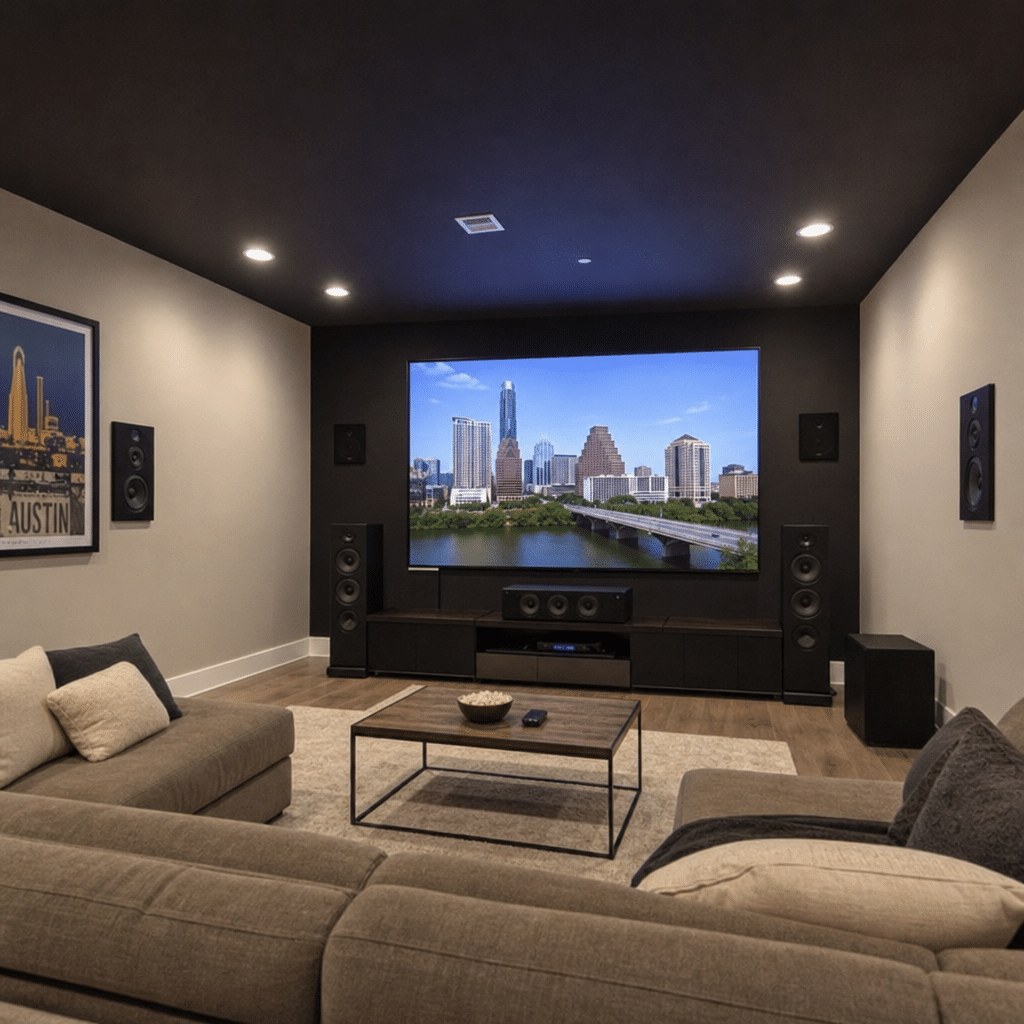
What makes a home theater system “the best” for an Austin home?
The best system is the one that fits your room, your habits, and your tolerance for complexity. A dedicated theater room may justify a projector, acoustic treatments, multiple subwoofers, and in-ceiling Atmos speakers. A family living room may work better with an excellent TV, discreet in-wall speakers, a compact subwoofer, and a simple remote or app-based control system.
Austin buyers also have a strong local advantage: professional integrators can offer design, installation, calibration, and customized system planning rather than simple box-and-cable sales. Austin Home Theater provides custom-designed home theater, smart home, media room, whole-home audio/video, and commercial AV services for Austin and Central Texas.
That matters because the best theater systems are rarely “one-size-fits-all.” Speaker placement, screen size, seating distance, wiring access, ceiling height, ambient light, and acoustic surfaces all change the final result. A system that sounds incredible in a windowless upstairs bonus room may feel boomy, bright, or visually overwhelming in an open-concept living area.
The strongest home theater system types in Austin
For most homeowners comparing best home theater systems Austin options, it helps to think in categories rather than brands first. Once the room type is clear, equipment choices become much easier.
Premium dedicated theater systems
A dedicated theater is the most immersive route. This setup is ideal if you have a spare room, media room, basement-style space, or new-build plan where seating, lighting, wiring, speaker angles, and acoustic treatment can be designed together. The core usually includes a large projection screen or premium large-format TV, an AV receiver or processor, separate amplification when needed, surround speakers, subwoofers, and overhead or height channels.
CEDIA’s immersive audio guidance emphasizes performance-based design, not just counting speakers, which is a useful mindset for serious theater rooms. (cedia.org) Dolby’s speaker setup resources also show why correct placement is central to a Dolby Atmos experience, whether the system uses a soundbar, speaker modules, or overhead speakers. (helix.dolby.com)
Choose this route if your priority is cinematic impact, controlled lighting, deep bass, and a room that feels separate from everyday TV watching.
High-performance living-room systems
Not every great theater needs rows of seats and a projector. Many Austin homes are better served by a living-room system built around a high-quality TV, a center speaker for dialogue, left and right speakers for music, surrounds for immersion, and one or two well-placed subwoofers. This is often the sweet spot for families that watch sports, stream movies, game, and listen to music in the same room.
The benefit is balance. You can keep the room attractive while still getting a major upgrade over TV speakers or a basic soundbar. Professional installation can also help the system fit naturally into the home’s décor while meeting the room’s performance goals.
Whole-home audio with a theater zone
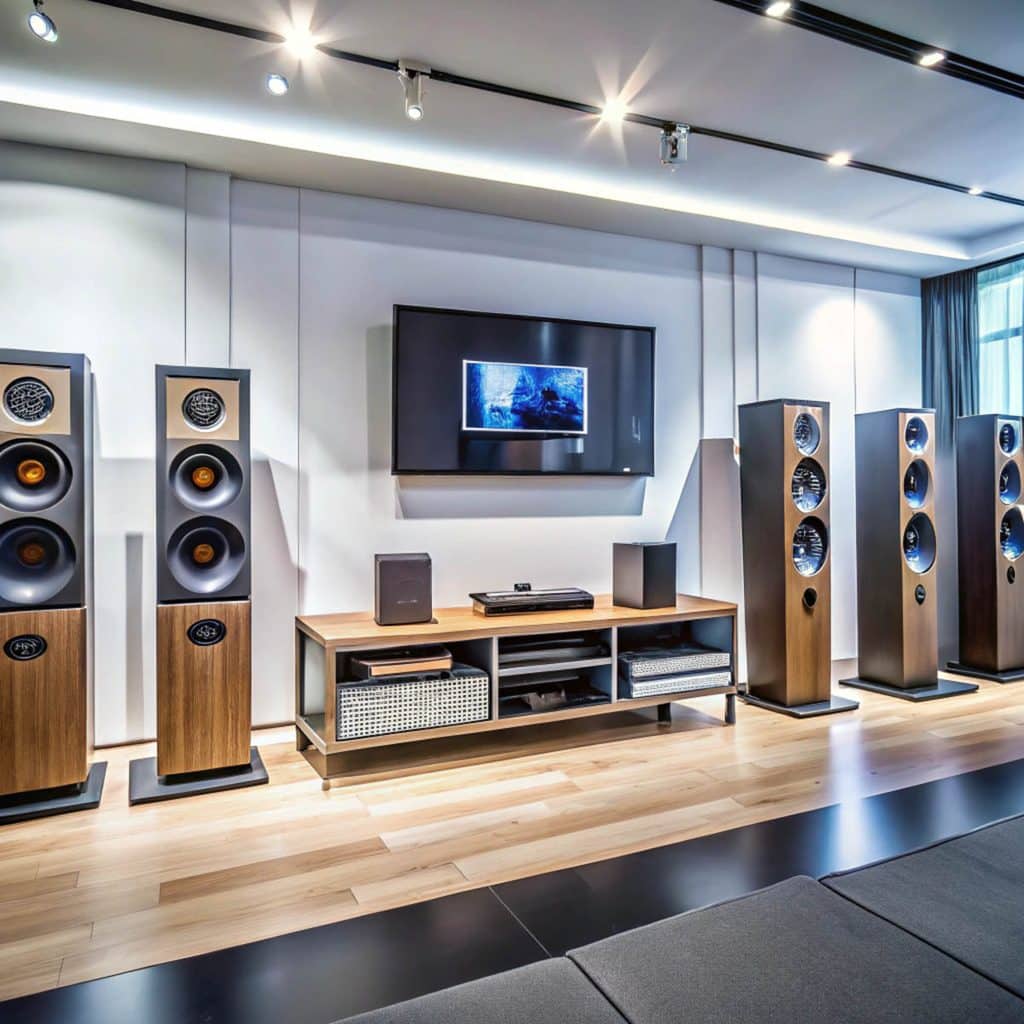
If you care as much about music as movies, a whole-home audio Austin plan may be the better investment. In this setup, the living room or media room becomes the theater zone, while kitchens, patios, bedrooms, offices, and outdoor areas can share music sources through in-ceiling, in-wall, bookshelf, or outdoor speakers.
This is especially practical in Austin homes where indoor-outdoor entertaining is part of everyday life. A whole-home approach can connect theater audio, indoor music zones, and outdoor entertainment while reducing clutter because the system is planned as infrastructure rather than as a collection of separate devices.
Simple professional setup and calibration
Sometimes the “best” system is not the biggest system. If you already own a TV, receiver, soundbar, speakers, or streaming devices, a professional setup may solve messy wiring, poor dialogue, weak bass, or confusing controls. Professional home theater setup can include system design, wiring, mounting, calibration, and configuration of equipment such as projectors, TVs, surround speakers, receivers, and streaming devices. This route is a smart fit for apartments, condos, short timelines, or homeowners who want better performance without opening walls.
How should you choose between soundbar, surround sound, and custom theater?
Choose a soundbar when simplicity, budget control, and clean appearance matter most. Choose surround sound when you want clearer dialogue, stronger bass, and a more convincing movie experience. Choose a custom theater when the room, budget, and expectations justify design work, acoustic planning, and more precise speaker placement.
A soundbar can be excellent in a bedroom, apartment, or casual TV area, especially when paired with a wireless subwoofer and rear speakers. It is usually easier to install and easier for guests to operate. The tradeoff is that it cannot place sound as precisely around the room as separate speakers can.
A receiver-based surround system is the middle ground. A 5.1, 7.1, or Atmos layout can make movies, sports, and games feel larger while still fitting a normal living room. Dolby’s setup guidance shows that Atmos systems can be built in multiple ways, including soundbars, enabled speakers, and home theater speakers, so there is flexibility for different rooms. (helix.dolby.com)
A custom theater goes further. It gives the installer room to solve the things homeowners often overlook: bass distribution, speaker coverage, screen height, projector throw, ventilation, equipment location, lighting control, and whether every seat hears balanced sound.
Key features that separate good systems from great ones
Great performance comes from integration. Before you compare brand names, ask whether each proposal addresses the following:
- Room-first design: The installer should ask about dimensions, seating, surfaces, windows, ceiling height, and how the room is used.
- Clear dialogue: A properly selected and positioned center channel often matters more than adding extra speakers.
- Balanced bass: One large subwoofer is not always better than two smaller, better-placed subs.
- Appropriate screen size: THX advises that screen placement and viewing angle affect the viewing experience, so bigger is not automatically better. (thx.com)
- Clean control: The best system should be easy for the household to use without a technician present.
- Network reliability: Streaming, app control, music zones, and smart home features depend on solid networking.
- Calibration: Speaker levels, delays, crossover settings, video settings, and room correction should be finished after installation.
If a proposal skips these topics and only lists equipment, keep asking questions.
Budget planning without buying the wrong system
Home theater budgets vary widely, so start with priorities instead of price tags. If movies are the focus, invest in the center channel, subwoofer, display, and room control. If music matters, give more attention to the front left and right speakers, amplification, and speaker placement. If the room must stay visually quiet, budget for in-wall speakers, concealed wiring, or custom cabinetry.

A practical buying sequence looks like this:
- Define the main room and the main use: movies, sports, gaming, music, entertaining, or all of the above.
- Decide whether the system must be visible, hidden, or somewhere in between.
- Set a total project budget that includes installation, wiring, mounts, control, calibration, and future service.
- Ask for at least two system options: a strong core package and an upgraded version.
- Prioritize items that are hard to change later, such as wiring, speaker locations, screen placement, and equipment ventilation.
This approach prevents the common mistake of spending too much on a display while underfunding sound, control, and installation.
The local takeaway for Austin homeowners
The best home theater systems in Austin are not just the most expensive boxes on a shelf. They are well-planned systems that suit the room, support the way your household watches and listens, and remain easy to use after the installer leaves.
If you want a true cinema feel, a high-performance living-room system, or whole-home audio that extends to your outdoor spaces, Austin Home Theater can help design a system around your room, lifestyle, and budget. With more than 18 years of experience serving Austin and Central Texas, our team provides custom home theater design, installation, audio/video integration, whole-house audio, and ongoing service. Contact Austin Home Theater today to schedule a free consultation and start planning the right entertainment system for your home.